Jacques Léger
Author of “Le tsunami des véhicules électriques chinois”. Previously VP Finance and head of the Transmissions Division at Valeo, Group Industrial Director at Alstom.
inLinkedIn profile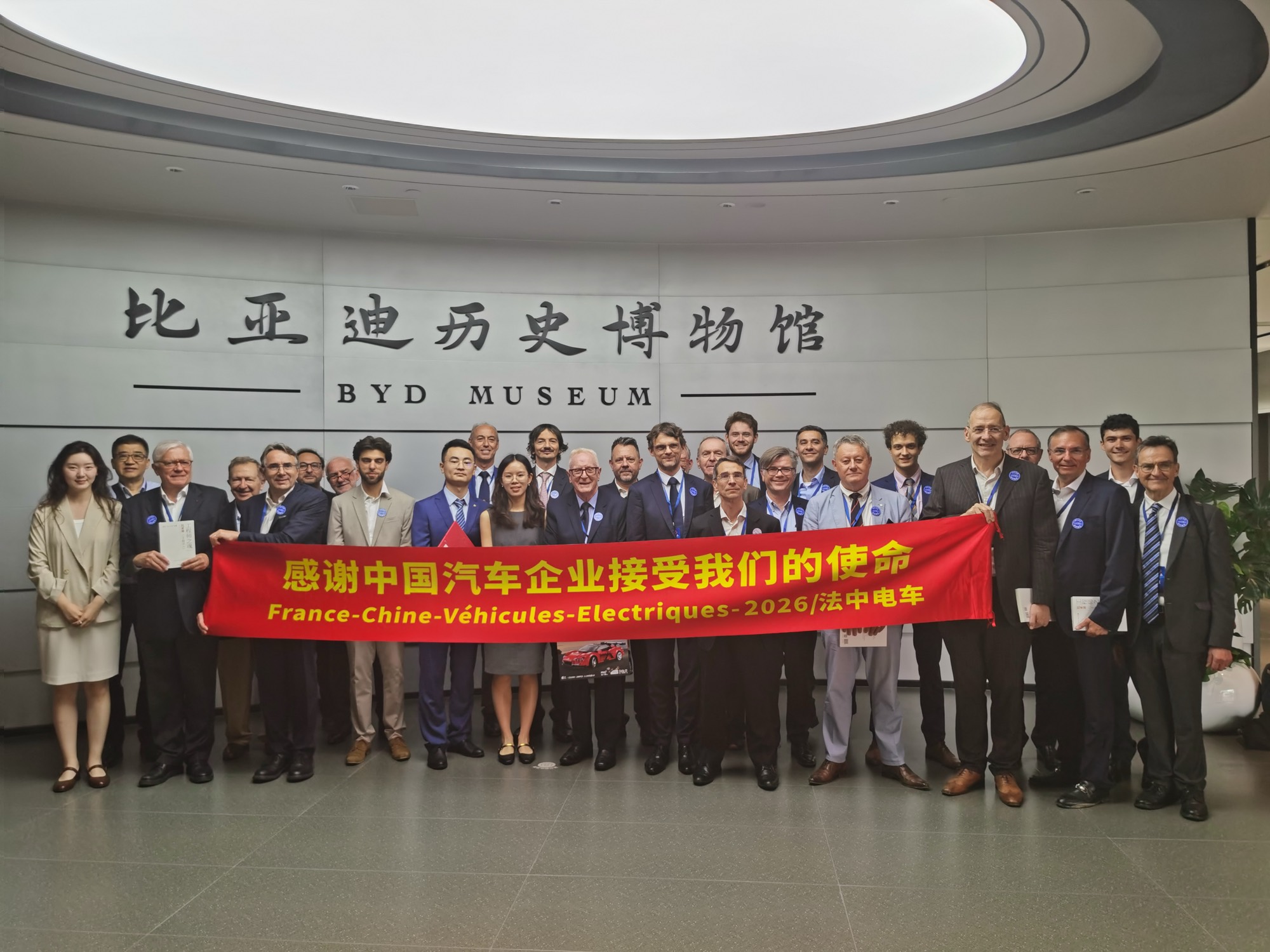
We created this website following the FCVE-2026 mission —which revealed the keys to China’s success in the automotive sector— to :
Time is running out !
Around Jacques Léger, a wide diversity of experience, expertise and generations — business leaders in post, public and professional institutions, academic researchers and five students from leading engineering and business schools. All made the trip; all contributed to the dossier.
Author of “Le tsunami des véhicules électriques chinois”. Previously VP Finance and head of the Transmissions Division at Valeo, Group Industrial Director at Alstom.
inLinkedIn profileChairman of Asia-Connect; founder of X-PM and former Chairman of KPMG Peat Marwick.
inLinkedIn profileExecutive engaged in technology consulting and in supporting corporate investment; previously at Bouygues.
inLinkedIn profileEurasia Tours. French–Chinese interpreter, organiser of industrial missions to China.
inLinkedIn profileResearcher at École Polytechnique; previously at Renault.
inLinkedIn profileCareer at Renault, Valeo and OPmobility.
inLinkedIn profileVice-President, XPO Logistics; previously at Caterpillar.
inLinkedIn profileIndustrial consultant; previously at Renault.
inLinkedIn profileCo-founder of Verkor; previously at Renault, Tesla and Audi.
inLinkedIn profileHead of Innovation, Groupe Charles André; previously at Volvo Bus.
inLinkedIn profileValeo R&D, engineering and marketing.
inLinkedIn profileFounder of GMTEC, commercial outsourcing.
inLinkedIn profilePreviously Design Synergies Director of the Renault-Nissan-Mitsubishi Alliance.
inLinkedIn profilePartner at Cetrac; previously at Airbus, Thales and Stellantis.
inLinkedIn profileTransmissions specialist: ZF, GM, Getrag, Valeo.
inLinkedIn profileAsia-Connect and BCG; previously at Nissan and Renault.
inLinkedIn profileAutomotive distribution and dealer networks. Co-author of the report on distribution in Europe and China.
inLinkedIn profileIndustry executive, Valeo and Forvia.
inLinkedIn profileProfessor and researcher at Arts et Métiers, PhD in robotics.
inLinkedIn profileAsia-Connect; previously at X-PM and BNP Paribas.
inLinkedIn profileNational Secretary, CFE-CGC — industry, economy and digital affairs.
inLinkedIn profileCo-founder of La Fabrique de l’industrie.
inLinkedIn profileDirector of the Expertise Division, Bpifrance.
inLinkedIn profileINSA Lyon.
inLinkedIn profileMines Nancy – ESSEC.
inLinkedIn profileESG Finance.
inLinkedIn profileMines Nancy.
inLinkedIn profileINSA Lyon — the mission’s reporter.
inLinkedIn profile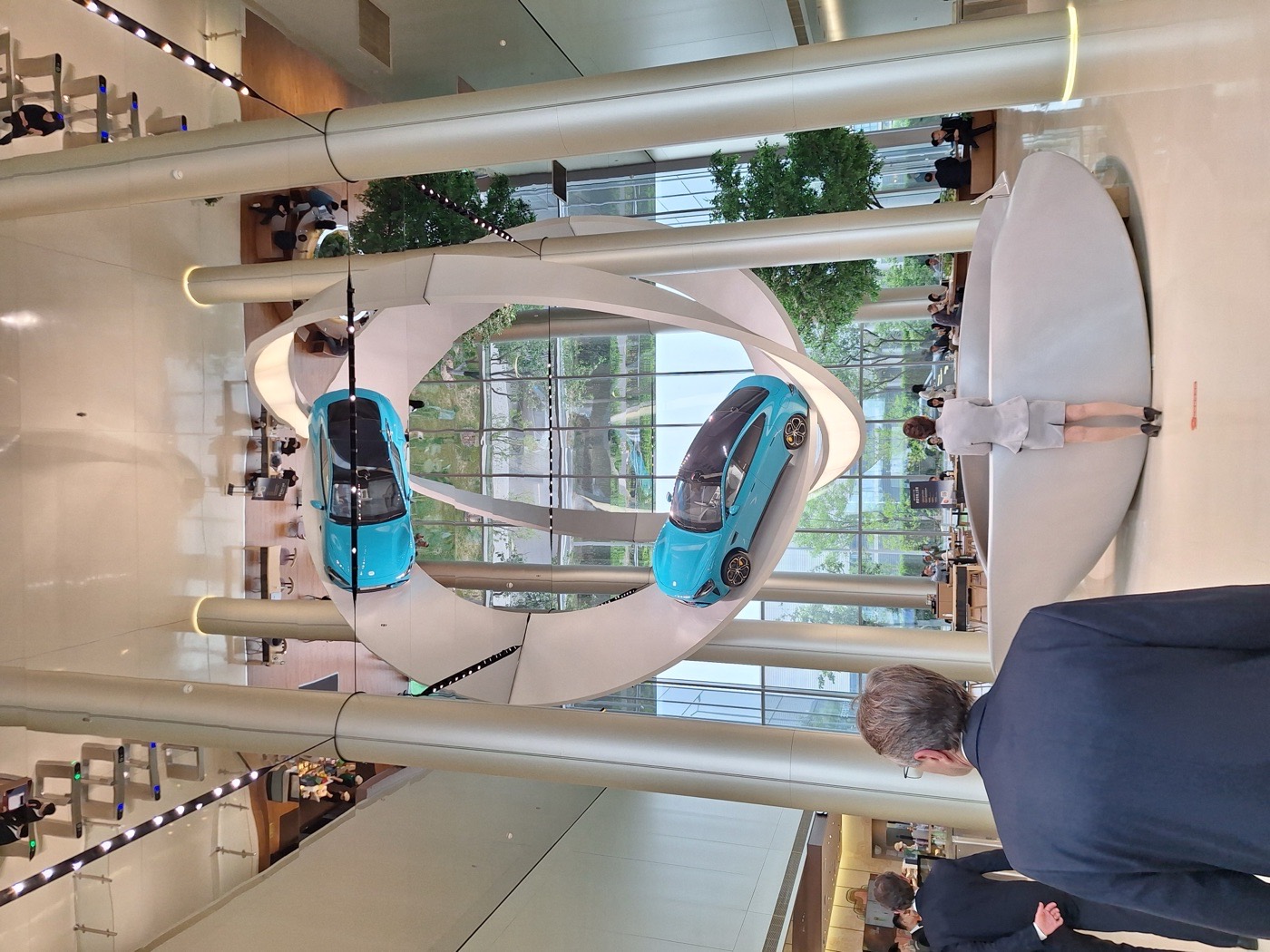
Today the veil is lifting, and China is making the headlines.
In the space of a decade, China has reversed the balance of power in the car industry: on its own market, Western carmakers have gone from 64% to 36% of market share, and Chinese carmakers from 36% to 64%. And the electric vehicle is only the first wave. Behind the car — the country’s leading industry — the same model is already being rolled out: batteries, power electronics, autonomous driving, humanoid robotics, air mobility.
Meanwhile, French industry has fallen from 30% to less than 10% of GDP. Noting how far behind we have fallen is no longer enough, any more than raising tariff or non-tariff barriers; we need to understand how China gained the industrial and technological upper hand, in order to raise awareness and then act — first and foremost on the ground, in companies — while there are still positions to defend and markets to win.
That is the purpose of the FCVE-2026 mission: to investigate on the spot what few European observers have seen or understood. Twenty-eight participants, ten days, and an exceptional programme of visits and professional meetings — and a dossier setting out the participants’ observations without sensationalism and without imputing motives, in order to prepare our response.
BYD, the world’s leading manufacturer of new-energy vehicles — battery-electric and plug-in hybrid — and Huawei, a “Tier 0.5” supplier.
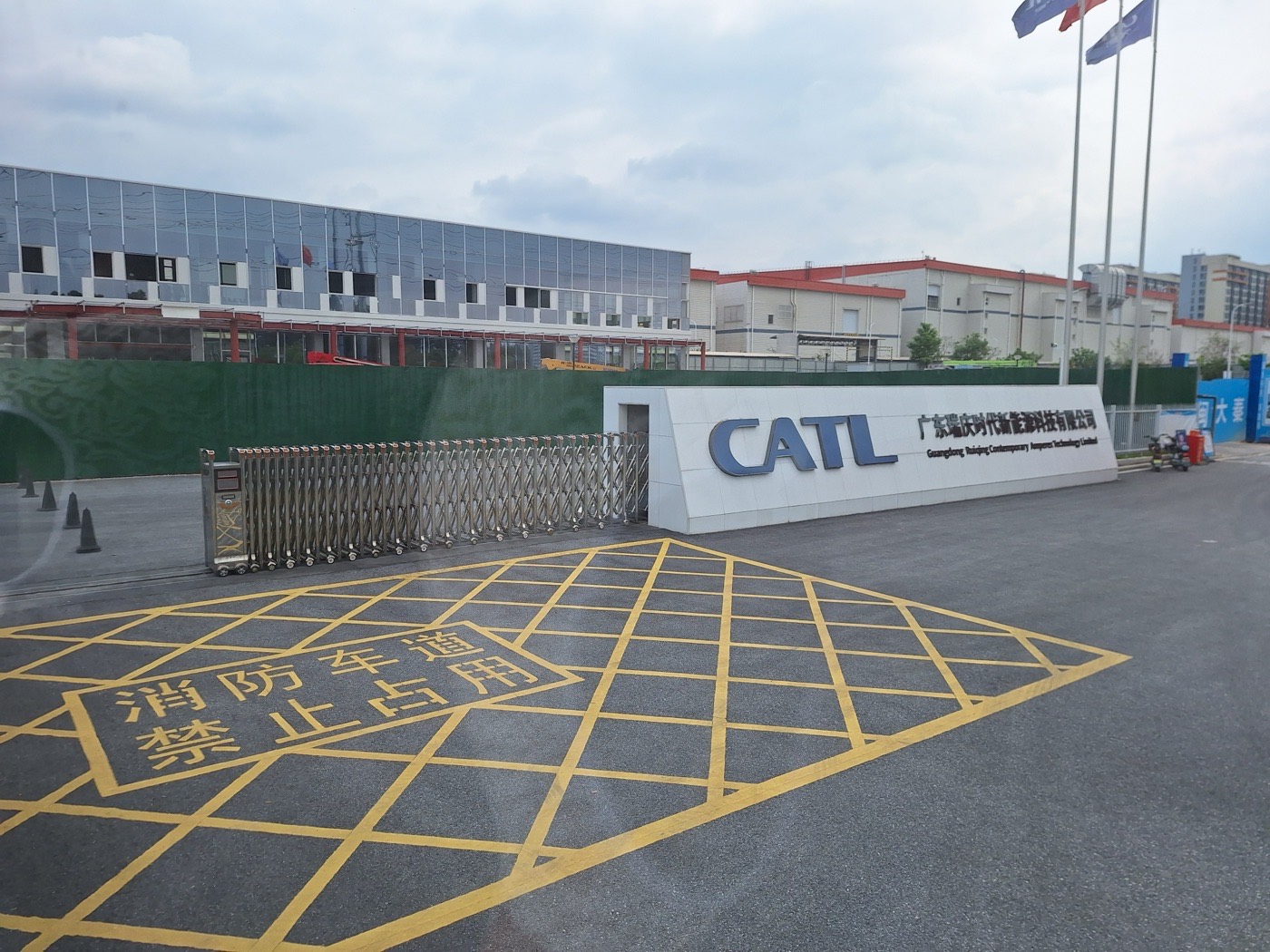
XPeng, one car every 90 seconds, and CATL, the world’s No. 1 in batteries.
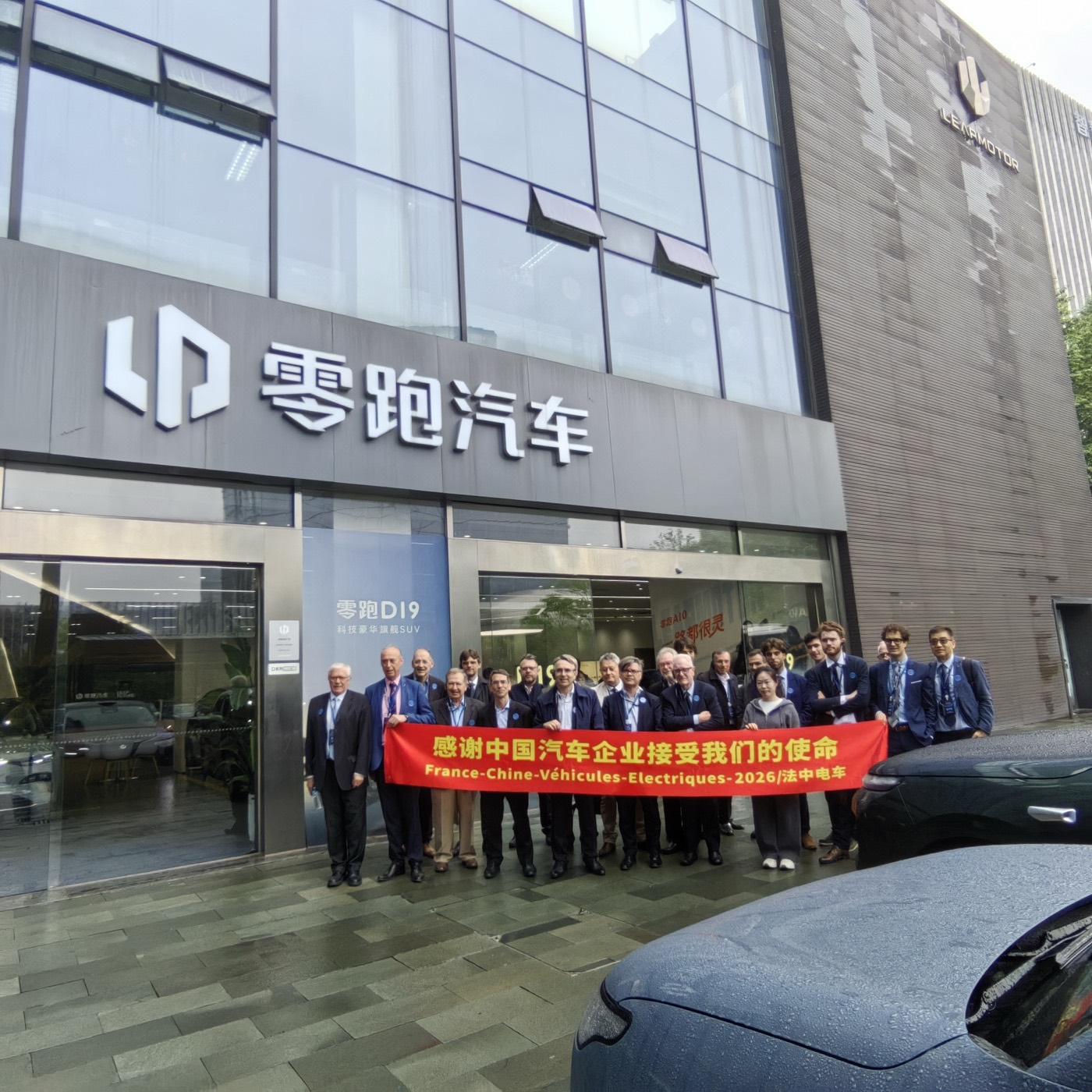
Geely; Leapmotor, Stellantis’s partner; the Six Dragons robotics park; and the International Innovation Conference.
The city-sized Xiaomi plant, built from the ground up in 14 months; the Beijing Auto Show; the Detion Club, a network of 50,000 Chinese SMEs; and a meeting with Mr SHI Jianhua of the National Development and Reform Commission (NDRC).
Ten findings observed on the spot and documented, on which all the members of the mission agree. The text below is that of the dossier, uncut.
The political system is the pairing of a “directive but collaborative” regime, to prepare the national offering (planning), with a “liberal” regime that lets entrepreneurs exploit the national potential in their own best interests, in a climate of intense competition.
In the West it is either liberalism or state direction; in China it is both, but at different moments. No other country has managed it on this scale.
China optimises at the scale of the nation, whereas the rest of the world confines itself (the Toyota model) to ecosystems optimised at the level of the extended enterprise, together with its suppliers.
That ecosystem is the sum of many parts: national planning and technology roadmaps; the pooling of everything that is not differentiating; regulation that organises the field; speed of execution; the involvement of the digital giants and of “Tier 0.5” suppliers; strong, targeted public support; special economic zones dedicated to a single industry; control of strategic materials and dominance of key sectors, starting with batteries; continuity of leadership; sheer numbers of engineers; ultra-modern infrastructure; robotisation; civic spirit and collective ambition; a weak currency.
It is a revolution that is hard to copy in the West, where competition law prohibits this kind of concerted action and where private interest comes before the national interest.
These zones, from 100 to 2,000 km² for the major cities, offer ultra-modern infrastructure along with tax and social-contribution advantages; the density of firms there sustains permanent competition.
No one in the world can compete with China in this field any longer, for want of any comparable concentration.
Reproducing such concentration outside China would require zones on the same scale — nothing of the kind exists in Europe today, where production is instead dispersing towards Eastern Europe, Spain, Turkey and Morocco.
Within that gap, working time accounts for 20%, and the share of the population in work for 80% (55% in productive work in China, against 28% in France).
To that workforce, add the robots: half of all those installed worldwide each year are installed in China.
China thus develops six cars for the same budget, and in the same time, as a European carmaker developing a single one.
The aim is to reach a market first and take enough of it — at least 50% — to become “uncatchable”.
China gives priority to growth rather than profitability in every substitution market (electric cars), where Westerners, conversely, put profitability before growth.
Finance serves the growth strategy, not the other way round: BYD finds funding it would not find in the West, while Western groups whose very future is under threat go on paying dividends.
Anticipating “Western decarbonisation ambitions”, China set its plan in motion long ago to gain the advantage: renewable energy, batteries and strategic materials, control of numerous mines around the world, almost the entirety of global refining capacity, and command of every battery technology (NMC, LFP, sodium, solid-state). Above all, command of industrialisation, after ten to fifteen years of development funded by the state or the provinces — a problem Europeans are discovering only today.
China trains twice as many students in scientific disciplines as the United States and Europe combined.
Take into account their numbers, their speed and the pooling of know-how at national level — set against the West’s every-firm-for-itself — and the firepower of Chinese engineers is formidable.
We found that national ambition in every single person we met.
The aim is to recover the technical supremacy China exercised over the world for centuries, and lost from the unequal treaties of the nineteenth century onwards.
We sat in on project reviews devoted to individual functions: steering (wheels turning through ± 90°), new suspensions, more effective and quieter braking, the autonomous car, lighting displays, digital interfaces, zero-gravity seats, the intelligent cockpit, ultra-fast charging, high voltage, and more.
Innovative software, electric motors, LiDAR, AI, autonomous driving: these building blocks are available to everyone, start-ups included.
The market is being flooded, with 500 models. In 2024, 54 Chinese models were aimed at Tesla; in 2026 the priority target is the German premium segment, at 50% to 60% less.
Financial support from the state, the provinces and the cities is enormous, in order to create jobs and exports.
China is building powerful soft power in the countries of the South, across Asia and into the West itself: entry into Formula 1, showcases of humanoid robots.
Chinese carmakers have mastered every electrified powertrain — plug-in hybrid, range extender and full electric (PHEV, EREV, BEV) — which is not yet the case in the West.
“Tier 0.5” suppliers offer a complete platform (with battery, electric motors, electronics, software, axles, suspension and more): all that is left for you to do is the bodywork and the seats.
Chinese carmakers do not stop at the car: they develop and produce high-growth “adjacent products” built on the same mechatronic building blocks as the electric vehicle.
These include photovoltaics, humanoid robots, vertical take-off and landing aircraft, and satellites to control their own communications. The aim is to earn a better return on R&D in core technologies and to create very high-margin markets, so as to afford more competitive selling prices on cars and accelerate their growth worldwide.
The service offering widens accordingly: integrated into its ecosystem and its partners, the car itself becomes a platform — autonomous driving is another.
In China, as in the United States, finding financing is not a problem for an entrepreneur. But the solutions are different.
In China, an entrepreneur will find a multitude of support schemes from their city, their province and the central state — and all the more so where the project is in line with the nation’s development plan.
Free land, premises made available by the city, zero-interest loans for equipment, long-term loans, supplier credit — suppliers themselves being able to refinance cheaply with local banks, and so on.
What a contrast with Western practice!
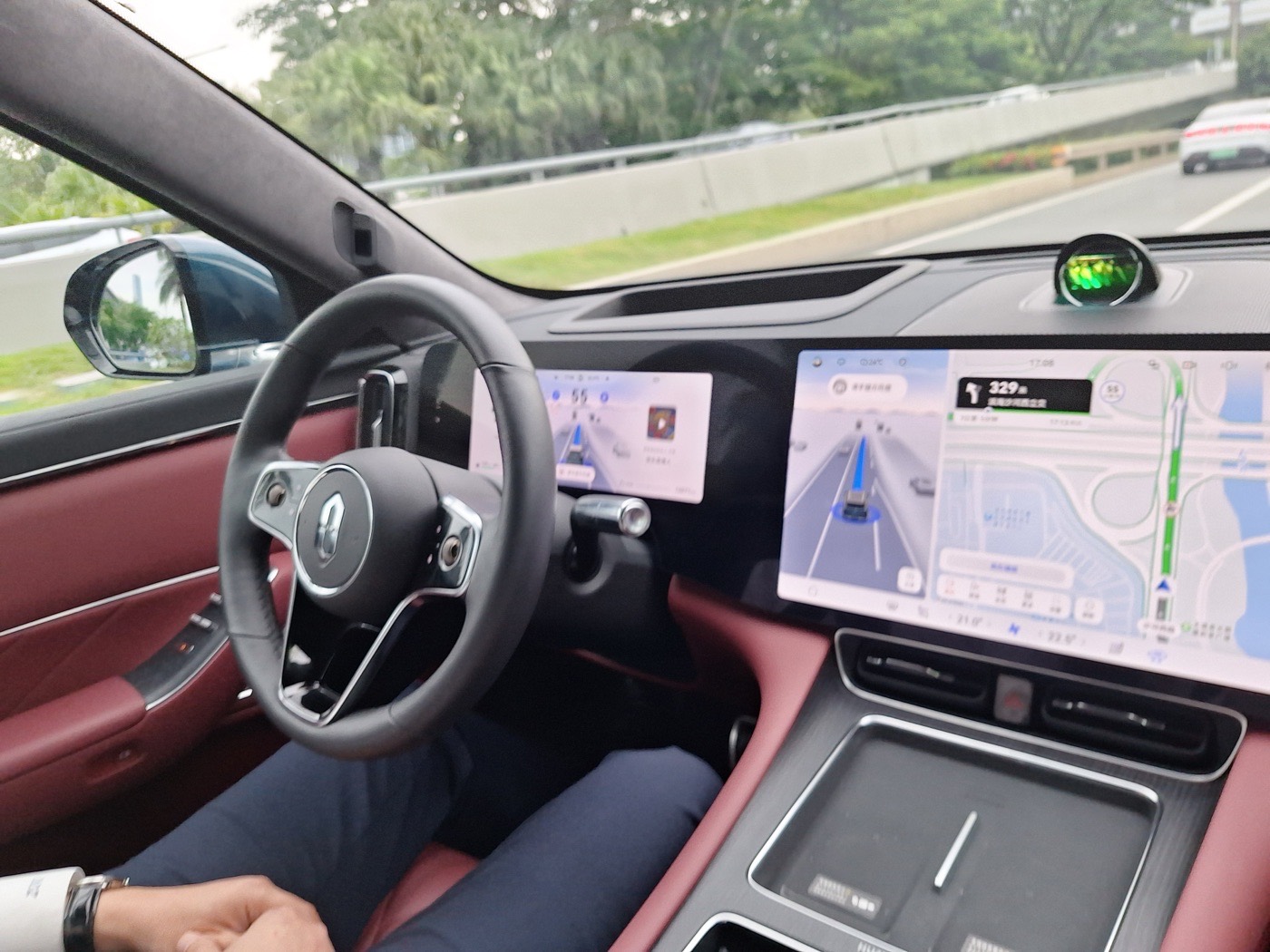
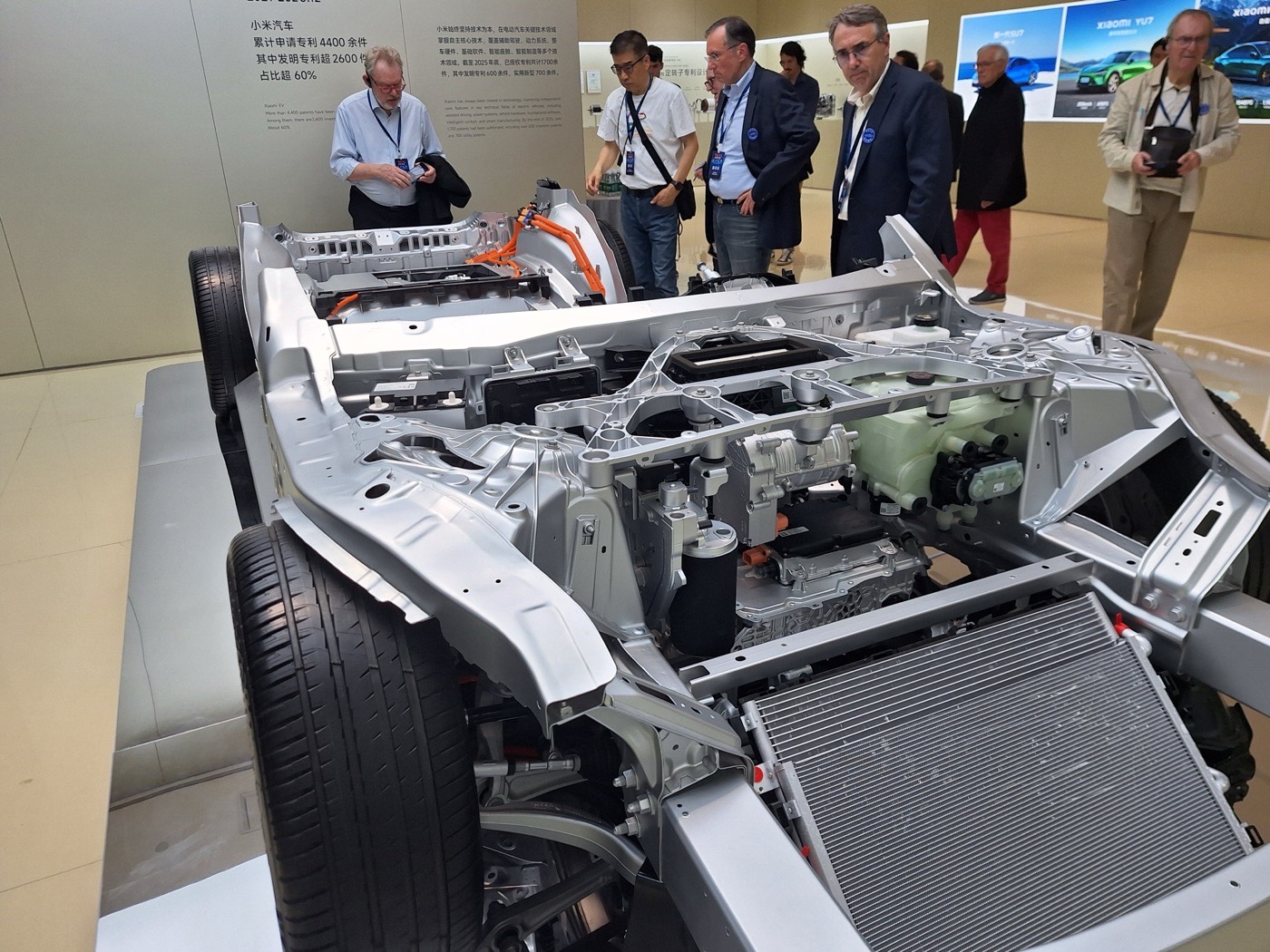
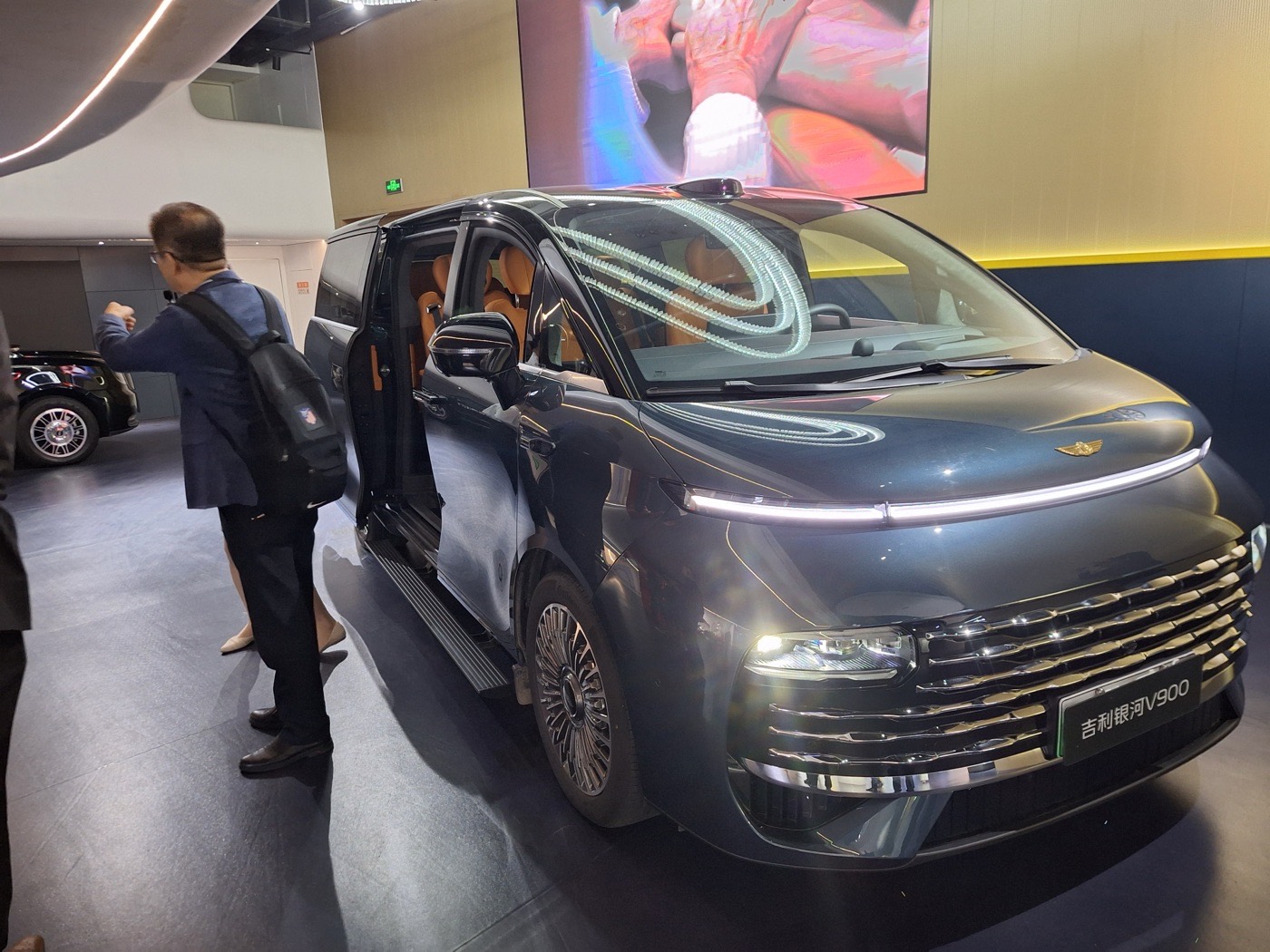
Written by members of the mission — before departure for the analyses, on the spot for the interviews. Downloading is immediate once your account is open.
Account of the meeting held in Beijing on 25 April 2026: the automotive chapter of the 15th Five-Year Plan presented in preview, and what the Commission’s expert acknowledged about the model’s weaknesses. 26 pages.
Strengths0102 Create an account and download →History and workings of the special economic zones, concentration effect and experience curve — and what it would take to reproduce them in Europe. 18 pages.
Strengths03 Create an account and download →In two parts: higher education in China, by Marc Alochet, researcher at École Polytechnique; China’s workforce, by William Born, IRIS graduate, university lecturer and geopolitics consultant. 20 pages.
Strengths040708 Create an account and download →Development cycles, deadlines held, growth put before profitability: how speed became an industrial weapon. 20 pages.
Strengths05 Create an account and download →The two booklets together: battery technologies on the one hand, industrialisation and the lock on the materials chain on the other. 55 pages.
Strengths06 Create an account and download →How a project aligned with the national plan finds land, premises, zero-interest loans and supplier credit — and why profitability is required only afterwards. 33 pages.
Strengths10 Create an account and download →The six reports offered here are drawn from a far larger body of work, assembled before, during and after the mission: 25 expert reports prepared in advance (664 pages), their 25 five-page summaries, the synthesis of every visit, 12 accounts of company visits and events, 32 reports on stands at the Beijing Auto Show, 8 filmed interviews and a complete photo library.
To these are added the four books “Face à la Chine” by Jacques Léger and members of the mission, three of them finished and one being written.
The whole is being prepared as an encyclopedia of the Chinese automotive industry, setting out the drivers of China’s industrial and technological model. When you open an account, you can ask to be told when the books appear and when this body of work opens.
The findings start with the car industry, the country’s leading industry and the most legible ground. But they are meant to be built upon: what they describe — the specialised zone, organised selection, speed of execution, patient financing — is in no way specific to cars.
The lessons to be drawn from China’s dominance, for France, for Europe and for the Western world as a whole, belong to each of us. We will be glad to hear your views and to discuss what you see as our priorities for action today.
You have read the reports, you know industrial China from the inside, you have a view on what lies ahead? Testimonials will appear here.
Share yours: simply create an account — the form has a field for it. Published under your initials and the name of your organisation, after review.
Whether you represent a media outlet, an institution, a professional association, a school, an industrial or service company, let us engage in a dialogue : your questions ? your proposals for action ?
A briefing for your teams, your executive committee or your members.
A round table with several members of the mission, on a theme chosen with you.
For press and media: access to participants according to their speciality.
Six observation reports from the mission, downloadable as soon as an account is opened.
You can contact individual members or the entire mission team (see the "The Mission" tab). Please specify the details of your project, and you will be put in touch with the relevant member(s).
Four books, edited by Jacques Léger, bring together the expert reports, the visit accounts and the analyses of the mission. Three are finished, the fourth is being written. When you open an account, you can ask to be told when they appear.
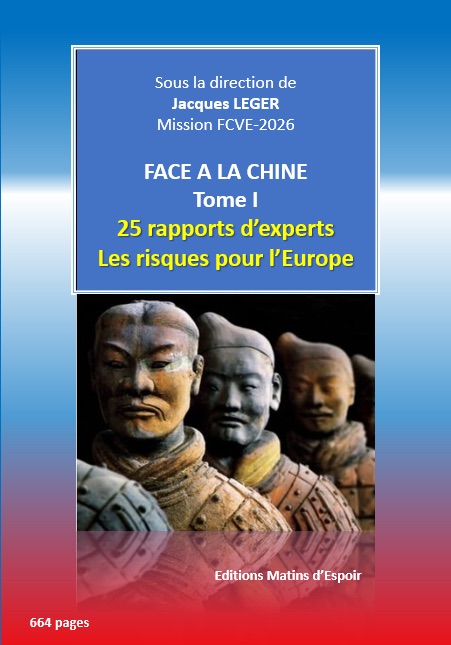 Volume I
25 expert reports — The risks for Europe
664 pages
Volume I
25 expert reports — The risks for Europe
664 pages
|
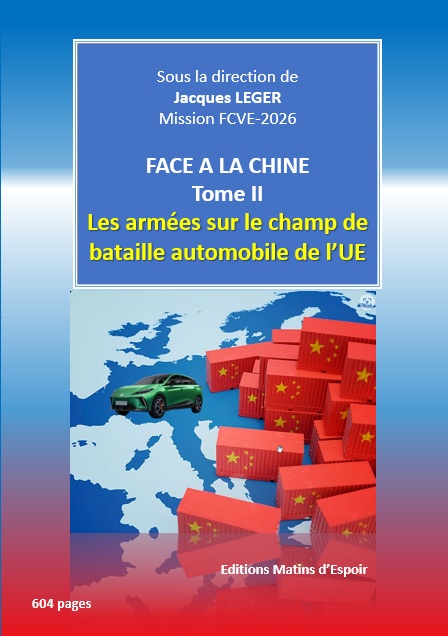 Volume II
The armies on the EU’s automotive battlefield
604 pages
Volume II
The armies on the EU’s automotive battlefield
604 pages
|
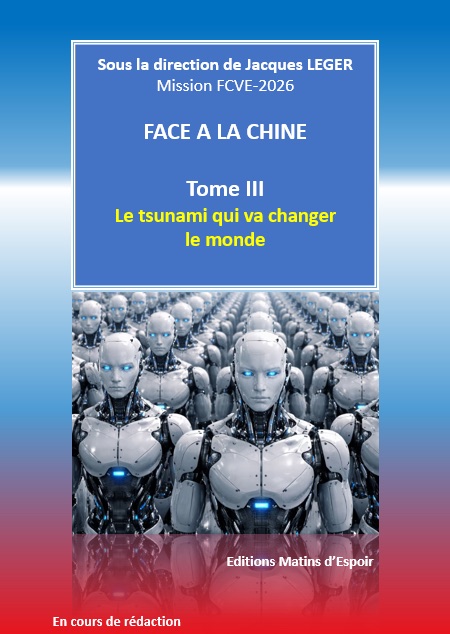 Volume III
The tsunami that will change the world
In preparation
Volume III
The tsunami that will change the world
In preparation
|
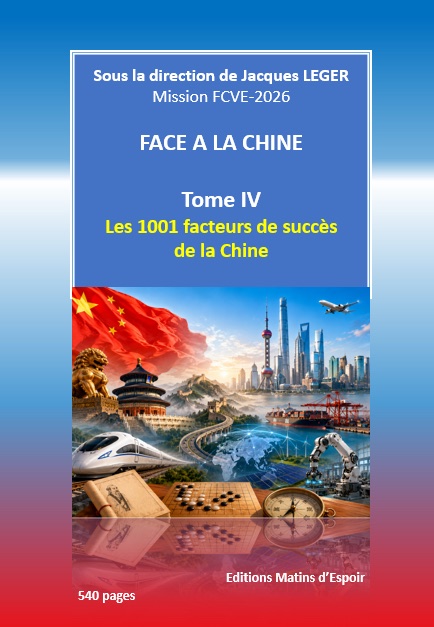 Volume IV
The 1,001 factors behind China’s success
540 pages
Volume IV
The 1,001 factors behind China’s success
540 pages
|